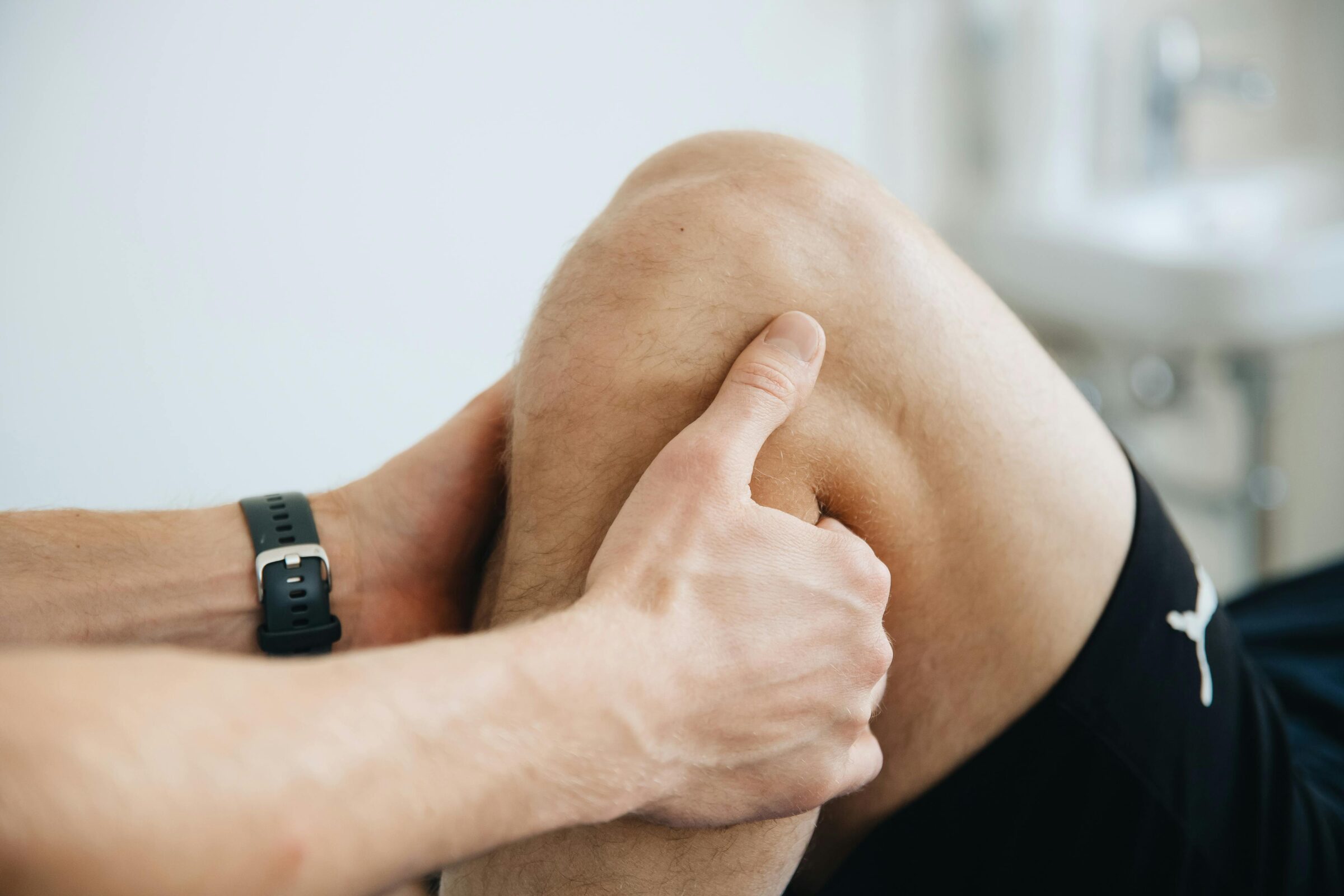
knee adjustment

Conditions

Knee Pain

Knee pain often starts higher up — in the hip, pelvis, or low back — and resolves when the whole chain is addressed.

The knee rarely acts alone

Knee pain is one of those concerns where the symptom and the source are often in different places. The knee is a hinge caught between the hip and the foot, so when either of those isn’t moving well, the knee absorbs the difference.

That’s why so many people get short-term relief from rest or a brace, only to have the pain return as soon as they get back to normal activity. The brace isn’t addressing the cause — it’s borrowing time.

We assess the knee itself, but we also look at the hip, pelvis, ankle, and foot mechanics. We watch how you walk, how you stand, and how you load the joint through normal movement.
Woman resting on the floor near a bright window

Common knee patterns we treat

If any of these sound familiar, the issue likely isn’t just in the knee:

Pain on stairs

Sharp pain bending or squatting

Stiffness after sitting

Clicking or popping

Pain after long walks

Aching at night

Knee gives way

Weakness or instability

How we help your knee feel solid again

We treat the whole chain — not just the joint that hurts.

  • Restore motion in the hip, pelvis, ankle, and foot
  • Address muscle imbalances that overload the knee
  • Adjust the joint itself with gentle, specific technique
  • Coach gait and loading habits so the gains stick
Our Focus

“A knee that handles stairs, hikes, kids on the floor, and life without protest.”

Your care, step by step

Care here is unhurried, conservative, and explained as we go. Here's what your first weeks look like.

01

Listen carefully

We start by understanding how the symptoms behave, what daily life looks like, and what you have already tried so the plan reflects your reality.

02

Assess the full chain

We look at the spine, nearby joints, posture, movement habits, and the areas that may be feeding irritation further down the line.

03

Start gentle, specific care

Adjustments are conservative and tailored. Nothing is rushed, and we explain what we are doing before we do it.

04

Support progress at home

Simple guidance around posture, movement, and daily habits helps your body keep building on the changes between visits.

Common questions about Knee Pain

These are the questions we hear most often from patients dealing with Knee Pain.

Do you adjust the knee directly?

Yes, when appropriate — alongside care for the hip, pelvis, and foot.

Will I need surgery?

Often no. Most non-acute knee pain responds well to conservative care.

I have arthritis — can you still help?

Yes — gentle care can meaningfully improve comfort and function in arthritic knees.

How long until I notice change?

Most adults feel some difference within the first few visits.

Can I still run?

Often yes — with modifications during the recovery phase.

What about meniscus tears?

Many small meniscus issues respond well to conservative care; we’ll be honest if surgical consult is warranted.

Walk, hike, and play without negotiating with your knee.

A whole-chain approach often works where braces and rest fall short. Let’s look at what’s really going on.